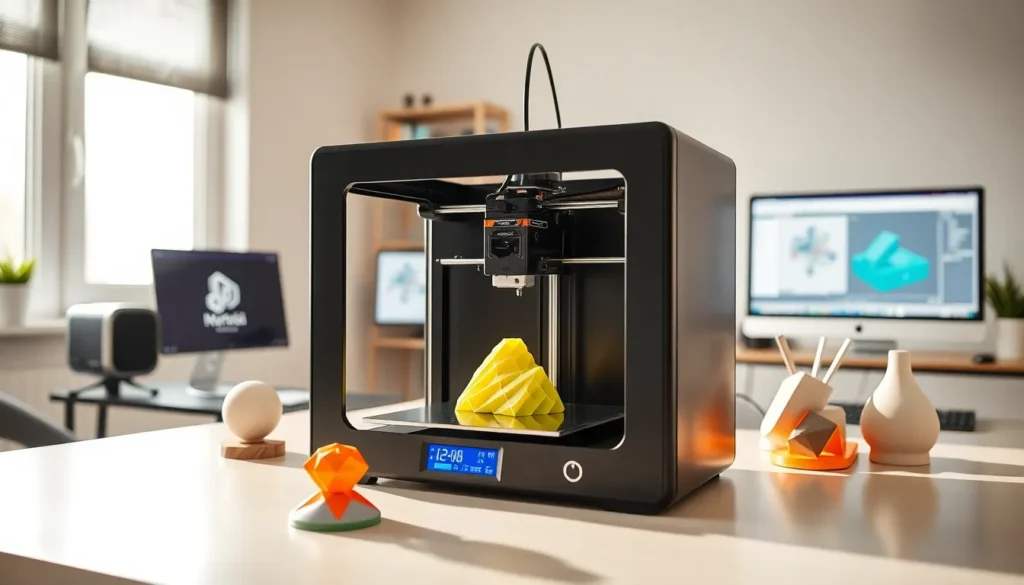
3D printing has changed how people create physical objects. This technology builds items layer by layer from digital designs. What started as an expensive industrial tool now sits on desks in homes, schools, and small businesses worldwide.
The process goes by another name: additive manufacturing. Unlike traditional methods that cut away material, 3D printing adds material only where needed. This approach reduces waste and opens doors to shapes that older techniques simply can’t produce.
This guide covers everything beginners need to know about 3D printing. It explains how the technology works, explores different printing methods, and highlights the materials available today. By the end, readers will understand how to choose their first printer and start creating.
Table of Contents
ToggleKey Takeaways
- 3D printing builds objects layer by layer from digital designs, making it accessible for homes, schools, and businesses alike.
- FDM printers are the most beginner-friendly and affordable option, while SLA and MSLA offer finer detail for specialized projects.
- PLA filament is ideal for beginners due to its low printing temperature and minimal warping, while PETG and ABS provide greater durability.
- Industries like healthcare, aerospace, and automotive use 3D printing for custom prosthetics, lightweight components, and rapid prototyping.
- Quality beginner 3D printers cost between $200 and $500, with community support being a critical factor when choosing your first machine.
- Expect a learning curve with 3D printing—start with simple calibration prints and join online communities for troubleshooting help.
How 3D Printing Works
Every 3D printing project starts with a digital file. Designers create these files using CAD (computer-aided design) software or download them from online libraries. The file contains precise measurements for each dimension of the object.
Specialized software called a slicer then divides this 3D model into thin horizontal layers. Think of it like slicing a loaf of bread. The slicer generates instructions that tell the printer exactly where to deposit material.
The printer reads these instructions and builds the object from the bottom up. It deposits or solidifies material one layer at a time. Each layer bonds to the one below it. This process continues until the entire object takes shape.
Most consumer 3D printers use a heated nozzle that melts plastic filament. The nozzle moves along X and Y axes while the build plate moves along the Z axis. This coordination allows the printer to place material precisely where the design requires it.
3D printing speeds vary based on object size, layer height, and printer settings. A small figurine might take two hours. A large vase could require twelve hours or more. Patience remains essential for quality results.
Common Types of 3D Printing Technology
Several 3D printing technologies exist today. Each offers different advantages for specific uses.
FDM (Fused Deposition Modeling)
FDM printers dominate the consumer market. They melt plastic filament and extrude it through a nozzle. The material cools and hardens almost immediately after placement. FDM machines cost less than other types and use affordable materials. They work well for prototypes, toys, and functional parts.
SLA (Stereolithography)
SLA printers use liquid resin instead of plastic filament. An ultraviolet laser cures the resin layer by layer. This method produces smoother surfaces and finer details than FDM. Jewelers, dentists, and miniature hobbyists favor SLA 3D printing for its precision.
SLS (Selective Laser Sintering)
SLS technology uses a laser to fuse powdered material. The powder supports the object during printing, which eliminates the need for separate support structures. Industrial users choose SLS for strong, functional parts. But, these machines remain expensive for home use.
MSLA (Masked Stereolithography)
MSLA works similarly to SLA but uses an LCD screen to cure entire layers at once. This speeds up print times considerably. Budget-friendly resin printers often use MSLA technology, making detailed 3D printing more accessible to hobbyists.
Popular Materials Used in 3D Printing
Material choice affects strength, appearance, and printability. Here are the most common options for 3D printing projects.
PLA (Polylactic Acid) stands as the most beginner-friendly filament. It prints at lower temperatures and produces minimal warping. PLA comes from renewable resources like corn starch. Most decorative prints and prototypes use this material.
ABS (Acrylonitrile Butadiene Styrene) offers greater strength and heat resistance than PLA. LEGO bricks use ABS plastic. This material requires higher temperatures and good ventilation during 3D printing because it releases fumes.
PETG combines the ease of PLA with improved durability. It resists moisture and chemicals better than both PLA and ABS. Many functional parts benefit from PETG’s balance of properties.
TPU (Thermoplastic Polyurethane) creates flexible, rubber-like objects. Phone cases, shoe insoles, and gaskets often use TPU. This material requires slower print speeds but produces unique results.
Resin materials work exclusively with SLA and MSLA printers. Standard resins produce detailed models with smooth surfaces. Specialty resins offer properties like flexibility, toughness, or castability for jewelry making.
Metal powders and carbon fiber composites exist for industrial 3D printing applications. These materials create parts strong enough for aerospace and automotive use.
Practical Applications Across Industries
3D printing serves far more purposes than making plastic trinkets. Industries worldwide have adopted this technology for serious applications.
Healthcare uses 3D printing to create custom prosthetics, dental implants, and surgical guides. Doctors can now print patient-specific models for surgery planning. Researchers are even experimenting with bioprinting living tissue.
Aerospace companies print lightweight components that reduce fuel consumption. Traditional manufacturing can’t produce some of these complex internal structures. 3D printing makes previously impossible geometries achievable.
Automotive manufacturers prototype new parts rapidly with 3D printing. Some companies now print end-use components for custom and vintage vehicles. This technology cuts development time from months to days.
Architecture firms create detailed scale models using 3D printers. Clients can hold and examine buildings before construction begins. This visual aid improves communication and catches design issues early.
Education benefits as schools bring 3D printers into classrooms. Students learn design thinking and see their ideas become physical objects. STEM programs increasingly rely on 3D printing projects.
Home users print replacement parts, custom organizers, and unique gifts. The maker community shares thousands of free designs online. A broken appliance knob or missing game piece no longer means buying a whole replacement.
Getting Started With Your First 3D Printer
Choosing a first 3D printer can feel overwhelming given the options available. A few key factors help narrow the decision.
Budget matters most for beginners. Quality FDM printers now cost between $200 and $500. Resin printers start around $150 but require additional spending on resin and cleaning supplies. Factor in ongoing material costs when planning.
Build volume determines how large objects can be. Bigger isn’t always better, larger printers cost more and take longer to heat. Consider what projects seem most appealing before buying the biggest machine available.
Community support makes a huge difference for beginners. Popular 3D printing brands have active forums, YouTube tutorials, and readily available replacement parts. Obscure machines leave users stranded when problems arise.
Some recommended steps for new users:
- Download free slicer software like Cura or PrusaSlicer
- Browse design repositories such as Thingiverse or Printables
- Start with simple calibration prints to learn machine settings
- Join online communities for troubleshooting help
- Experiment with different materials once basics feel comfortable
3D printing involves a learning curve. First prints often fail. Bed adhesion issues, stringing, and layer shifts frustrate every beginner. Patience and willingness to troubleshoot separate successful hobbyists from those who give up.